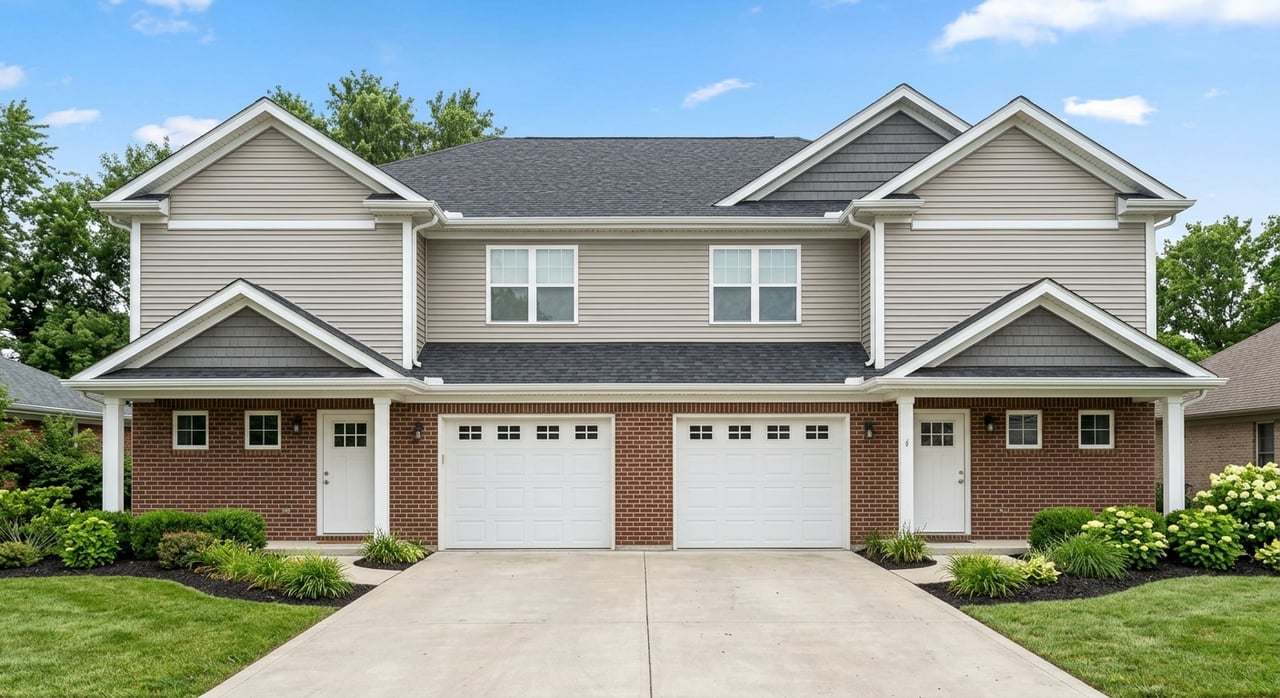
Thinking about buying a duplex, triplex, or fourplex in Omaha? It can be a smart way to start building long-term wealth, but the numbers need to work before the property does. If you are new to small investment properties, this guide will help you understand Omaha’s rental market, what to look for, how to budget, and where financing can differ for owner-occupied versus investment purchases. Let’s dive in.
Why Omaha Appeals to Small Investors
Omaha offers a mix of affordability, steady employment, and a meaningful renter base that makes it worth a look for first-time small multifamily buyers. According to the U.S. Census QuickFacts for Omaha, the city population was estimated at 489,265 in 2024, with a 57.4% owner-occupied housing rate.
That means roughly 42.6% of housing units are not owner-occupied, which points to solid rental demand across the city. The same Census data shows median gross rent at $1,187 and median household income at $73,201, while median monthly owner costs with a mortgage were $1,783. Those figures help explain why renting remains an important part of the local housing picture.
Omaha also benefits from a diverse economy. The Greater Omaha Chamber highlights strong activity across finance, insurance, tech, healthcare, and advanced manufacturing, and local employment data has also shown household growth. For you as a buyer, that matters because a broader job base can support more stable renter demand over time.
Start With the Right Property Type
If you are just getting started, small multifamily properties often mean 2- to 4-unit buildings. These can include duplexes, triplexes, and fourplexes, and they tend to be a more approachable first step than larger apartment properties.
Many buyers like these properties because they can offer multiple income streams under one roof. If one unit is vacant, the other units may still help offset expenses. That said, more units also mean more maintenance, more tenant turnover risk, and more moving parts in your budget.
If you plan to live in one unit and rent the others, your financing options may look very different from a true non-owner-occupied investment purchase. That difference can shape your down payment, reserve requirements, and long-term strategy from day one.
Omaha Locations to Watch
In Omaha, location matters just as much as the property itself. A building’s age, condition, nearby amenities, and access to employment centers can all affect rents, vacancy, and tenant demand.
Popular Omaha districts often come up in early property searches. Visit Omaha highlights areas such as Old Market, North Downtown, Midtown Crossing, Benson, Blackstone District, Little Bohemia, Aksarben Village, Dundee, and South Omaha as notable entertainment neighborhoods. These areas differ in housing stock, feel, and nearby amenities, so they should be treated as separate micro-markets rather than one broad rental category.
Submarket data reinforces that point. In Cushman & Wakefield’s Q4 2025 Omaha multifamily report, vacancy was 4.7% in Central Omaha and 4.7% in West Omaha, compared with 12.1% in Downtown Omaha, 10.2% in Midtown, 9.5% in North Omaha, and 2.9% in South Omaha. Effective rents in that report also ranged widely, from $754 in South Omaha to $1,601 in Elkhorn.
The takeaway is simple: citywide averages are a starting point, not the full story. A renovated duplex near a renter-heavy district may perform very differently from an older property in another part of the city. When you compare opportunities, focus on the specific block, condition, and rent position of that property instead of relying only on broad Omaha averages.
Understand Omaha Rent and Vacancy Trends
Omaha’s rental market has stayed active, but it is not a market where you should assume every unit stays full all year. Recent reports show a healthy market with rising rents, but also higher vacancy as new supply has come online.
CBRE’s Q2 2025 Omaha multifamily figures reported vacancy at 6.2% with average asking rent at $1,285 per unit. Cushman & Wakefield’s later Q4 2025 report showed vacancy at 8.2% and effective rent at $1,249 per unit. The numbers are different because they reflect different periods and methods, but both reports point to the same practical lesson: rents have been rising, yet vacancy has also become more important to watch.
For you, that means conservative underwriting matters. It is better to build a deal around realistic rent assumptions and some downtime between tenants than to count on best-case occupancy.
Focus on Cash Flow, Not Gross Rent
One of the most common mistakes first-time investors make is falling in love with gross rent. A property may look strong on paper when you add up all advertised rents, but that is not the same thing as cash flow.
A better approach is to follow the budgeting framework in Fannie Mae’s landlord guidance. That guidance recommends comparing expected rent against mortgage payments, real estate taxes, insurance, utilities, repairs and routine maintenance, major improvements, vacancy reserves, and professional services.
In other words, cash flow comes from net operating income, not gross scheduled rent. You want to know what is left after the real costs of ownership, not just what the rent roll says in a perfect month.
A simple first-pass checklist should include:
- Expected market rent for each unit
- Mortgage payment
- Property taxes
- Insurance
- Utilities you may cover
- Repairs and routine maintenance
- Capital improvements over time
- Vacancy and nonpayment reserves
- Property management or other professional services, if needed
This is also where local context matters. A property with updated interiors, better systems, and a stronger location may justify higher rent assumptions than an older building with deferred maintenance. The Omaha data supports using neighborhood-level comparisons instead of broad citywide averages whenever possible.
Financing Can Change the Math
Your financing path depends heavily on whether you will live in the property. For many first-time buyers, this is one of the biggest reasons small multifamily can be attractive.
According to Freddie Mac’s maximum LTV guidelines, purchase loans can allow up to 95% loan-to-value for 2-unit principal residences and 95% for 3- and 4-unit principal residences. By contrast, 2- to 4-unit investment properties are capped much lower at 75% LTV for purchases.
That is a major difference. If you plan to house-hack by living in one unit, you may be able to buy with far less cash down than if you buy the same property strictly as an investor.
There may also be FHA options for qualifying owner-occupants. HUD notes that FHA down payments can be as low as 3.5% on 1- to 4-unit properties. This is not a blanket investor rule, but it is one reason many first-time buyers compare owner-occupied multifamily with conventional financing.
Lenders will also want rent documentation. Fannie Mae’s rental income guidance explains that eligible rent usually must be supported by documentation such as an appraisal, market-rent opinion, signed lease, or borrower statement in certain cases. If you already own financed properties, you may also face additional reserve requirements.
Due Diligence Matters More Than Excitement
It is easy to get excited when you find a property in a well-known Omaha area, but due diligence is what protects you. Before you move forward, make sure the property, rents, and condition all support your plan.
If you are considering renovations, unit additions, or a conversion, Omaha’s Developer’s Guide page is a smart place to start. The city recommends reviewing the guide and contacting the Planner’s Help Desk with questions about what can be built and where. Even in an acquisition-focused purchase, zoning and permitting questions can affect your upside.
For older properties, lead-based paint rules may also apply. The EPA states that sellers and landlords of most pre-1978 housing must disclose known lead-based paint information before a sale or lease. That can be especially important if you are buying an older duplex or triplex and planning updates.
A Smart First Step in Omaha
A good first small investment property in Omaha is rarely about chasing the trendiest address. It is usually about finding the best match between location, condition, realistic rent potential, financing, and your comfort level as an owner.
If you are buying your first duplex, triplex, or fourplex, start with conservative numbers and a clear plan. In Omaha, submarket differences are real, vacancy should be part of your math, and financing can look much better if you plan to live in the property. When you put those pieces together, you give yourself a much stronger foundation for a property that works now and supports your long-term goals.
If you want help evaluating small investment property opportunities in Omaha, connect with Avid Realty. You will get local, practical guidance grounded in Nebraska market knowledge and a relationship-first approach that keeps your goals front and center.
FAQs
What is a small investment property in Omaha?
- In this context, a small investment property usually means a 2- to 4-unit residential property such as a duplex, triplex, or fourplex in Omaha.
Is Omaha a good market for first-time small property investors?
- Omaha offers a sizable renter base, diverse employment, and relatively affordable rental housing compared with many larger markets, but you still need to underwrite each property carefully.
What Omaha areas should you compare for duplexes and fourplexes?
- You should compare specific submarkets and neighborhoods individually because vacancy and effective rent can vary widely across areas like Central Omaha, Downtown Omaha, Midtown, South Omaha, and West Omaha.
How should you estimate cash flow on an Omaha rental property?
- Start with realistic rent, then subtract mortgage payments, taxes, insurance, utilities, maintenance, repairs, vacancy reserves, and any professional services instead of relying on gross rent alone.
Can you buy a small multifamily property in Omaha with a low down payment?
- If you plan to live in one unit and qualify as an owner-occupant, financing options may allow a lower down payment than a true investment property, including certain conventional and FHA paths.
What should you check before renovating a small investment property in Omaha?
- You should review zoning, permitting, and city guidance before starting work, and for many older properties you should also confirm whether lead-based paint disclosure rules apply.