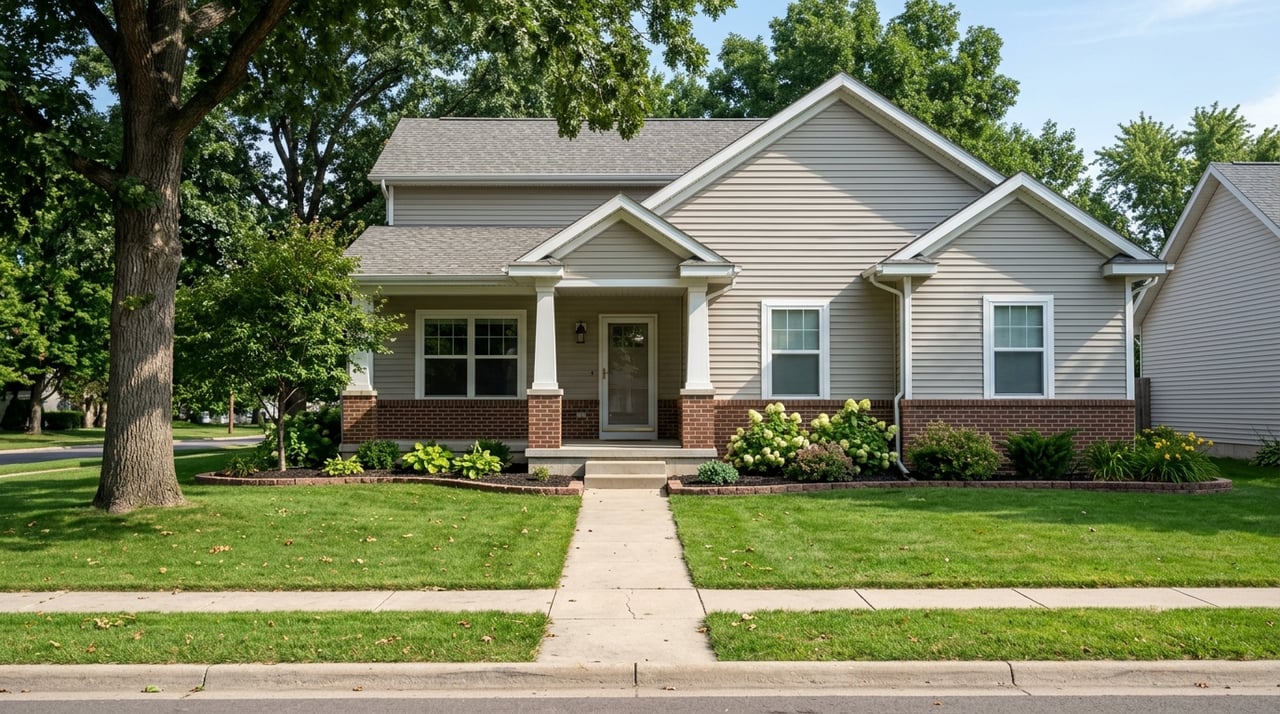
Wondering whether an established Gretna neighborhood or a newer subdivision is the better fit for your next move? It is a smart question, especially in a city that continues to grow while still holding onto its small-town roots. If you are comparing home styles, street layouts, parks, and day-to-day lifestyle, this guide will help you weigh the tradeoffs and focus on what matters most to you. Let’s dive in.
Gretna Growth at a Glance
Gretna sits in western Sarpy County between Omaha and Lincoln, and city planning materials describe it as a rapidly growing community with booming housing development. That growth shapes how neighborhoods feel from one area to the next.
The city’s 2025 comprehensive-plan appendix says single-family residential uses make up 25 percent of Gretna’s land use. It also notes that multi-family housing is a smaller share and is mainly clustered around Highway 370 and 204th Street, downtown, and Highway 6 between Angus Road and Lincoln Road.
What Established Neighborhoods Offer
In Gretna, downtown is the clearest example of an established neighborhood pattern. According to the city’s comprehensive plan, it is the historic center and features historic brick streets, traditional small-lot residential blocks, and a walkable small-town feel.
You may also notice more mixed uses in established areas. The same city planning material says downtown includes City Hall, the children’s library, and small retail and service businesses, which can create a different rhythm than a purely residential subdivision.
Some homes in these older areas are historic, and the city notes that some show a need for maintenance. For buyers, that can mean more character and a more traditional street pattern, but it may also mean looking closely at upkeep and repair needs.
Established Area Highlights
If you are drawn to older parts of Gretna, you may appreciate features like:
- Smaller-lot residential blocks
- Historic streets and a traditional layout
- A walkable setting in the downtown core
- Nearby civic and commercial uses
- Access to long-standing park spaces
Lincoln Place Park is one example of the park amenities connected to established neighborhoods. The city says it connects into the Lincoln Place Neighborhood and includes shelters, a ballfield, a basketball court, a playground, picnic tables, benches, and a bike rack.
Gretna’s broader park system also includes North Park, Peterson Park, and Forest City Recreation Area. If outdoor access is high on your list, established areas can still offer strong park connections along with a more familiar neighborhood pattern.
What Newer Neighborhoods Offer
Newer Gretna neighborhoods tend to have a more planned, subdivision-oriented feel. The city’s comprehensive plan describes newer residential neighborhoods as subdivisions with larger homes and parks.
That planned feel also shows up in the zoning code. Gretna’s zoning allows a range of lot and housing types in newer development, including 10,000-square-foot detached lots in R-1, 7,200-square-foot detached lots in R-2, 6,000 square feet per unit for attached homes in R-2, and as little as 2,500 square feet per unit for townhouses, condominiums, and multi-family uses in R-4.
For you as a buyer, that can translate into more uniform streetscapes, newer housing stock, and a wider range of housing forms depending on the subdivision. It can also mean neighborhoods that were built with parks and recreation as part of the overall plan.
Newer Area Highlights
Many buyers are attracted to newer neighborhoods because they often offer:
- Planned subdivision layouts
- Larger or newer homes
- More uniform housing styles
- Access to newer parks and recreation spaces
- Options that may include detached homes, attached homes, townhomes, or condos
Gretna Crossing Park is a major example of newer civic investment. It opened in September 2023 on 157 acres and includes the Gretna Crossing YMCA, an 18-hole disc golf course, dog parks, a fishing pond, playgrounds, sports fields, and walking and biking trails.
Forest City Recreation Area adds even more outdoor space with 81 acres, a 1.7-mile trail, 15 acres of lake area, fishing, and a kayak and canoe launch. For some buyers, easy access to newer recreational amenities is a big reason to focus on newer parts of town.
Nebraska Crossing is another notable nearby draw. Visit Nebraska describes it as the outlet center at I-80 Exit 432, with 75 premier brands and dining options, which can be a convenience factor for buyers comparing locations around Gretna.
Comparing Daily Lifestyle
When you compare established and new neighborhoods in Gretna, the real question is often how you want daily life to feel. Established areas may appeal to you if you want a historic setting, smaller-lot street patterns, and a mix of residential and civic or commercial uses nearby.
Newer neighborhoods may fit better if you prefer a more predictable subdivision layout, newer housing, and easy access to recently added parks and large recreation spaces. Neither option is automatically better. It depends on your priorities.
A simple way to think about the tradeoff is character versus predictability. Established areas often bring more historic fabric and mixed-use surroundings, while newer areas often bring more standardized planning and newer amenities.
School Access and Growth
As Gretna has grown, school capacity has grown with it. Gretna Public Schools said Cedar Hollow Elementary was opening in August 2024 and connected that opening to neighborhoods such as Cedar Hollow, Cedar Ridge, Giles Pointe, Harrison Woods, Hills of Aspen, Hillview, Mirabel, Windsor East, and Windsor West.
For buyers looking in newer subdivisions, that may be one sign of how growth and planning are moving together. It can be helpful to ask how school boundary planning and new school capacity may relate to the neighborhoods you are considering.
Because attendance areas and school planning can change over time, it is wise to confirm the current details for any address you are seriously considering. That step can help you make a more confident decision as you narrow your search.
HOA Questions to Ask
One common assumption is that homeowners associations only show up in newer neighborhoods. In Gretna, that is not always the case.
Nebraska law defines a homeowners association as a nonprofit entity formed to collect fees for common elements and services, and the law also allows liens for unpaid assessments. That means HOA dues are more than a simple monthly cost. They may support shared amenities, maintenance, and rule enforcement.
The City of Gretna calendar also shows a Lincoln Place HOA-sponsored event, which is a good reminder that established neighborhoods can have associations too. In other words, HOA exposure is usually specific to the subdivision, not just the age of the neighborhood.
Review These HOA Items
Before you write an offer in any Gretna neighborhood with an HOA, review:
- The declaration
- The bylaws
- The assessment schedule
- Any recorded restrictions
- Rules tied to common areas or maintenance
This review can help you understand both the benefits and the responsibilities before you commit.
How to Choose the Right Fit
If you are still deciding, start by thinking about how you want your home and neighborhood to support your routine. Do you picture a traditional setting with historic streets and mixed uses nearby, or do you prefer a newer subdivision with modern recreation amenities and a more uniform layout?
It also helps to think beyond the house itself. Parks, neighborhood form, HOA structure, and access to newer community investments can shape your experience just as much as square footage or finishes.
A thoughtful neighborhood comparison can save you time and help you buy with more confidence. If you want local guidance while weighing established and new neighborhoods in Gretna, Avid Realty can help you sort through the options and find the right fit for your goals.
FAQs
What is the difference between established and new neighborhoods in Gretna?
- Established Gretna neighborhoods, especially around downtown, tend to have smaller-lot blocks, historic streets, and more mixed uses nearby, while newer neighborhoods are typically planned subdivisions with larger or newer homes, parks, and more uniform layouts.
Are newer Gretna neighborhoods closer to major parks?
- Many newer Gretna neighborhoods benefit from recent recreation investments such as Gretna Crossing Park and access to Forest City Recreation Area, although established areas also connect to parks like Lincoln Place Park, North Park, and Peterson Park.
Do established neighborhoods in Gretna have HOAs?
- Yes, some established neighborhoods can have homeowners associations, so it is best to check each subdivision or neighborhood individually rather than assume HOA rules only apply to newer areas.
What should you review before buying in a Gretna HOA?
- You should review the declaration, bylaws, assessment schedule, and any recorded restrictions so you understand dues, rules, maintenance obligations, and how the association operates.
Are there different housing types in newer Gretna developments?
- Yes, Gretna zoning allows a range of housing forms in newer development, including detached homes, attached homes, townhouses, condominiums, and multi-family housing in certain districts.
How can you choose between an older and newer Gretna neighborhood?
- Start by comparing your priorities, such as home style, neighborhood layout, park access, HOA structure, and how much you value historic character versus a more planned and predictable setting.